
When homeowners think about remodeling, their minds almost always drift to interior spaces. They imagine knocking down kitchen walls, laying marble tile in the primary bathroom, or converting a spare bedroom into a high-tech home office. While interior renovations certainly improve your immediate living comfort, it is the exterior of your home that shoulders the heaviest burden. The exterior is your home’s primary shield against the elements, its public face to the neighborhood, and the foundation of its financial curb appeal.
An exterior home remodel is a comprehensive undertaking that bridges architectural design, civil engineering, and environmental management. A successful project transforms your property from a standard house into a cohesive, secure, and visually stunning estate. However, because the exterior is completely exposed to weather patterns, property lines, and ecological variables like mature vegetation and subterranean pests, it requires a unique, highly strategic approach. Moving forward without a precise order of operations can lead to ruined investments, structural safety hazards, and code violations. This comprehensive guide serves as your master roadmap for navigating a complete exterior transformation, from initial site planning to the final finishing touches.
Planning Outdoor Improvements Before Construction Begins
The secret to a flawless exterior remodel lies in the weeks of preparation before a single shovel strikes the dirt or a single old board is torn away. An exterior remodel often involves multiple moving parts that must be executed in a precise sequence. For example, if you plan to install a new paver patio and a fresh retaining wall, but you also need to upgrade your home’s main underground drainage lines, the utility work must happen first to avoid destroying your expensive new hardscaping later.
To establish a bulletproof workflow, the initial planning phase should involve consulting with a licensed landscape contractor. A professional contractor will look at your property holistically, assessing slopes, soil stability, and water runoff patterns. They can draft a comprehensive master site plan that zones your property for utility infrastructure, heavy equipment access routes, and final aesthetic features. Furthermore, a professional handles the bureaucratic complexities of the project, securing municipal permits, checking property boundary surveys, and coordinating with local utility marking services to map out buried gas, electric, and water lines. This initial blueprint shields your budget from unexpected delays and protects your property from accidental damage.
Evaluating Existing Yard Features and Vegetation
Before introducing new architectural elements, structural features, or manicured gardens, you must perform a forensic audit of what is already on your land. Mature vegetation is a valuable asset that adds character, shade, and value to your property, but it can also present hidden liabilities. Large root systems can silently compromise your home’s foundation, crack underground sewer lines, or uplift driveways and walkways.
During your site evaluation, pay close attention to every mature tree within striking distance of your home or planned renovation zones. Look for warning signs of structural instability or decay, such as trunk cavities, deep fungal growth around the base, or heavy limbs leaning precariously over your roofline. You must also evaluate how existing canopy shade will affect new exterior finishes; a house completely shrouded in dense, damp shade is far more susceptible to wood rot, algae growth on siding, and premature roof failure. Evaluating your vegetation early allows you to decide which plants can be integrated into the new design and which ones present too great a risk to your home’s safety and longevity.
Addressing Pest Problems Before Exterior Upgrades
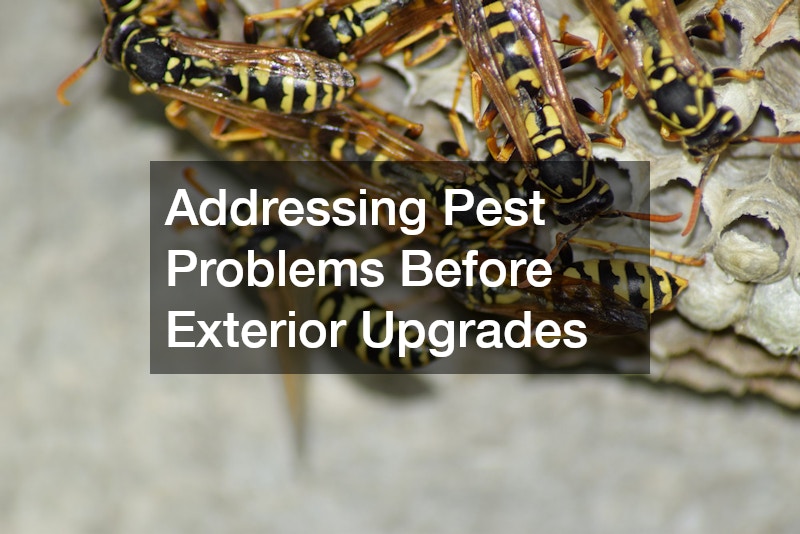
One of the most catastrophic mistakes a homeowner can make is investing thousands of dollars in premium exterior finishes—such as real wood siding, custom decks, or structural porches—only to attach them to a home that is secretly suffering from an active pest infestation. Wood-destroying organisms can compromise the structural framing of your home from the inside out, meaning your beautiful new cosmetic upgrades will merely be masking a collapsing foundation.
Before any exterior reconstruction or siding replacement begins, scheduling a comprehensive inspection and establishing robust termite control is an absolute necessity. Subterranean termites move silently through mud tubes along foundation walls, feeding on the structural sheathing and studs hidden beneath your exterior facade. If an active colony is detected, it must be completely eradicated, and the damaged wood must be replaced before new materials are applied. Furthermore, installing a preventative chemical or baiting barrier around the perimeter of the foundation during the remodel ensures that your new investments remain completely safe from future wood-boring insect attacks.
Managing Large Tree Projects Safely and Efficiently
When an exterior remodel requires the modification or removal of massive, mature trees that loom over your home, safety becomes the single most important variable. Dropping massive limbs using standard ropes and ladders is an incredibly high-risk gamble that can result in catastrophic structural damage to your roof, crushed power lines, or severe personal injury. High-end property management requires industrial-grade solutions.
For complex, large-scale arboreal work, reliable teams utilize a professional tree crane service to manage the weight of massive timber sections mechanically. By securing a crane hook to a massive branch before it is cut, the operator can lift the severed wood vertically into the air and gently lower it into a designated processing zone away from the house. This precision method completely eliminates the unpredictable “drop zone” associated with traditional cutting, allowing technicians to work safely in incredibly tight residential quarters without risking damage to your home’s new siding, windows, or landscaping features.
Removing Damaged Trees That Affect Property Safety

While every effort should be made to preserve healthy, historic trees, there are times when removal is the only responsible choice for property safety. Trees that have been severely hollowed out by disease, structurally split by past storms, or are lifting the surrounding foundation with aggressive root expansion represent a constant liability. Leaving an unstable tree standing next to a home is a countdown to disaster, especially in regions prone to high winds, heavy snow loads, or saturated soil conditions.
Executing a strategic tree removal project before you install new exterior elements ensures that heavy machinery can move freely across the yard without the risk of ruining fresh sod, premium paver paths, or delicate garden beds. Removing a hazardous tree eliminates the risk of a sudden collapse crushing your newly remodeled roof or deck. It also opens up the property envelope, allowing you to reconfigure your yard’s layout, introduce more sunlight to your home’s exterior, and build a more resilient, low-maintenance landscape design.
Hiring Professionals for Complex Outdoor Clearing Work
Outdoor clearing and large-scale tree management are not tasks for weekend DIY enthusiasts or general handymen operating with basic chainsaws. The physical forces involved in tensioned wood, shifting weights, and technical rigging require formal aerodynamic knowledge and specialized safety training. One wrong cut can send a multi-ton log swinging unpredictably toward a dwelling or an operator.
To ensure the safety of your family and property, you should strictly rely on certified, fully insured local tree removal services for all technical clearing work. Professional arborists possess the safety gear, climbing rigging, and high-capacity wood chippers necessary to dismantle large trees and clear overgrown brush safely and systematically. Verifying that your chosen service carries comprehensive general liability and workers’ compensation insurance is vital; this ensures that if an accident does occur on your property, the financial liability rests entirely with the company rather than your personal homeowner’s insurance policy.
Improving Curb Appeal With Strategic Property Maintenance

Once the hazardous and structural vegetation challenges have been cleared from the property, your focus can shift toward refining the long-term aesthetic and value of the estate. The trees and large shrubs that remain on your property should look intentional, manicured, and perfectly balanced with the architectural lines of your newly remodeled home home facade.
Partnering with a premier tree removal company for ongoing estate pruning and canopy thinning can dramatically elevate your home’s curb appeal. Professional pruning removes dead wood, opens up sightlines to the home’s architectural details, and allows natural sunlight to filter through to the lawn below. This strategic maintenance not only enhances the visual prestige of the property but also improves the health of the trees, making them more resilient against disease and storm damage, which ultimately protects your home from falling debris for years to come.
Choosing Low-Maintenance Solutions for Outdoor Spaces
A beautiful exterior should be a source of relaxation and pride, not a secondary full-time job that consumes every weekend with intensive yard work. Modern exterior remodeling trends place a massive emphasis on sustainability and low-maintenance materials that look pristine year-round with minimal human intervention.
To achieve a green, immaculate look without the constant demands of mowing, watering, weeding, and chemical fertilization, many homeowners are opting for premium artificial grass installations in specific zones of their property. High-quality synthetic turf looks identical to natural grass but eliminates muddy spots, pet stains, and the need for gas-powered lawn equipment. Additionally, artificial grass provides flawless drainage, preventing the standing water that mosquitoes need to breed and reducing the amount of moisture trapped against your home’s foundation or patio transitions. It delivers a crisp, manicured aesthetic that stands up to heavy foot traffic and changing seasons effortlessly.
Increasing Natural Light and Safety With Window Upgrades
An exterior remodel is the perfect opportunity to upgrade your home’s architectural windows, which serve as the visual “eyes” of the property and a vital component of your home’s energy envelope. Replacing old, drafty single-pane windows with modern, double or triple-pane low-E glass options drastically improves your home’s thermal efficiency while updating its exterior style.
If your remodeling plans include converting a basement or lower level into a legal, functional living space—such as a family room, home gym, or guest suite—you must integrate code-compliant egress windows into your exterior plans. These specialized, large-scale windows feature deep, built-in escape wells with steps or ladders, providing a safe, direct exit route in the event of an emergency like a house fire. Beyond meeting strict local building and life-safety codes, egress windows completely transform subterranean spaces, flooding previously dark, damp basements with massive amounts of natural light and ventilation, turning them into highly desirable square footage that boosts your home’s total valuation.
Replacing Entry Features to Improve Style and Efficiency
The final crowning jewel of an exterior remodel is the front entry system. Your front door is the focal point of your home’s curb appeal, the physical anchor that draws a visitor’s eye, and the literal threshold between the outside world and your private sanctuary. An outdated, weathered, or warped front door compromises your home’s security, visual style, and energy efficiency.
Investing in a high-end door replacement is one of the highest-return projects a homeowner can undertake. Modern entry doors constructed from insulated fiberglass or heavy-gauge steel offer up to four times the insulating value of traditional wood doors, featuring advanced weatherstripping systems that completely seal out cold drafts and summer humidity. From a design perspective, a new door allows you to make a bold architectural statement—whether you choose a sleek, minimalist double-door configuration with geometric glass side-lites or a classic, rich wood-grain finish with solid oil-rubbed bronze hardware. A premium front entry locks in your home’s new aesthetic, providing a secure, energy-efficient, and magnificent introduction to your home.
Embarking on an exterior home remodel is a profound commitment to your property’s long-term health, safety, and market prestige. By moving away from a purely cosmetic mindset and adopting a highly strategic, structural approach, you protect your home from the compounding threats of environmental decay, water infiltration, and structural instability.
A truly successful exterior transformation is built step-by-step upon a foundation of early site preparation and professional collaboration. By taking the time to design your site with a licensed landscape contractor, eradicating structural threats through advanced termite control, managing your mature tree assets safely, and sealing your home’s envelope with modern window and door systems, you achieve a harmonious balance of form and function. Your home ceases to be just a house on a lot; it becomes a masterfully engineered, secure, and beautiful sanctuary that provides comfort for your family and inspires pride every time you pull into the driveway. Take control of your property’s exterior transformation today, prioritize the correct order of operations, and enjoy a legacy of home safety and beauty for a lifetime.
 Home Improvement News